I had a great time at Behaviour 2025. I was upgraded to a talk but I attach my original poster below for anyone interested in the effect of urbanization on warning signals.

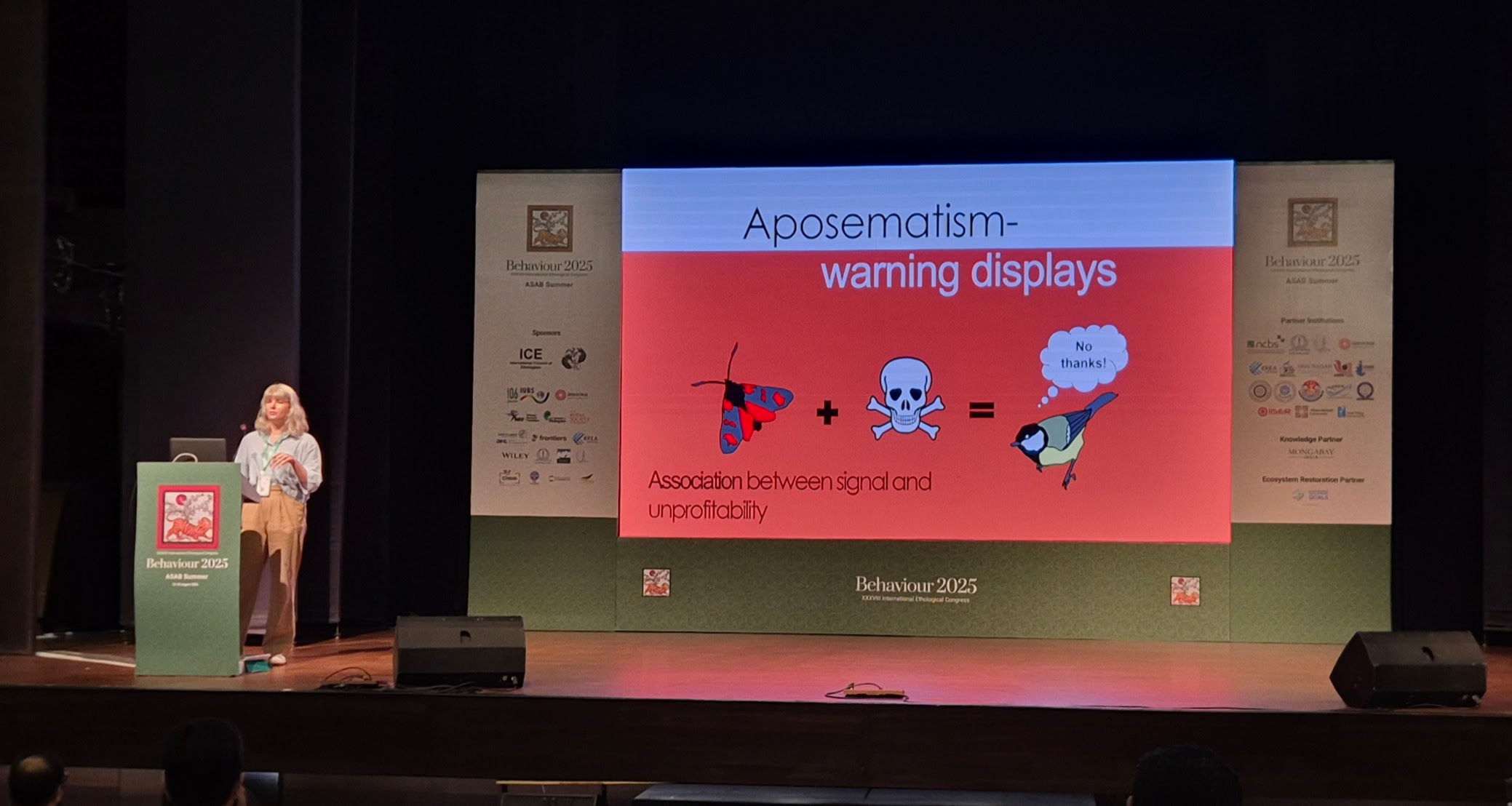

I had a great time at Behaviour 2025. I was upgraded to a talk but I attach my original poster below for anyone interested in the effect of urbanization on warning signals.
Last week I was lucky enough to be invited to give a Plenary at the ASAB easter meeting. It was great fun to talk about colourful moths and our new work looking at the impact of urbanisation on predator-prey signalling.
Fabulous plenary talk by @MothProf at @asab_conference @asab_tweets 🤓 #AcademicOffspring pic.twitter.com/zmj0wPqm5U
— David Shuker 💙 (@DavidMShuker) April 8, 2022
https://platform.twitter.com/widgets.js
The final plenary of @asab_conference Easter 2022 from @MothProf discussing aposematism 🦋 pic.twitter.com/hyMwHXxCVl
— Dr Helen Gray (@Helen_Gray_) April 8, 2022
https://platform.twitter.com/widgets.js
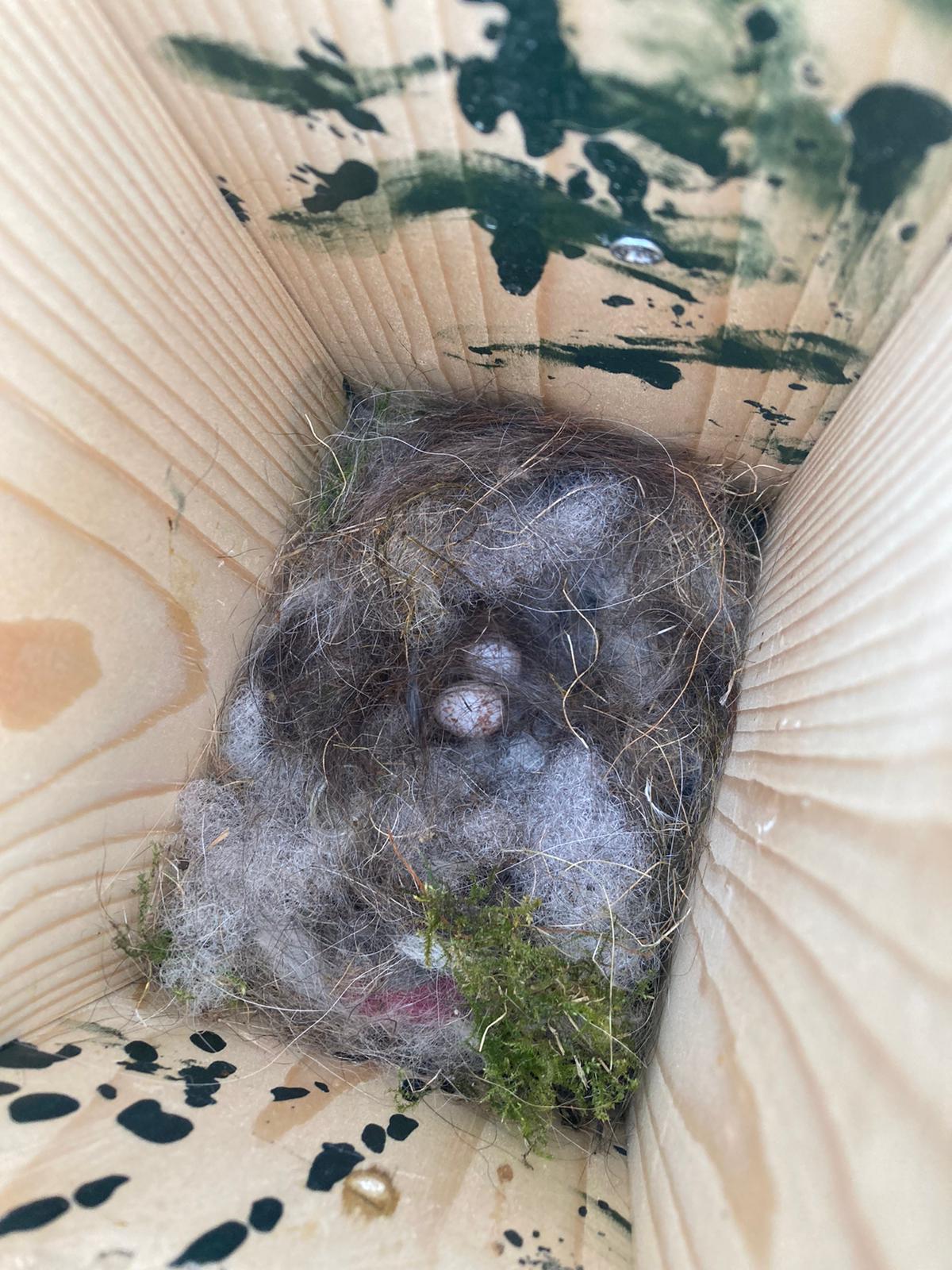
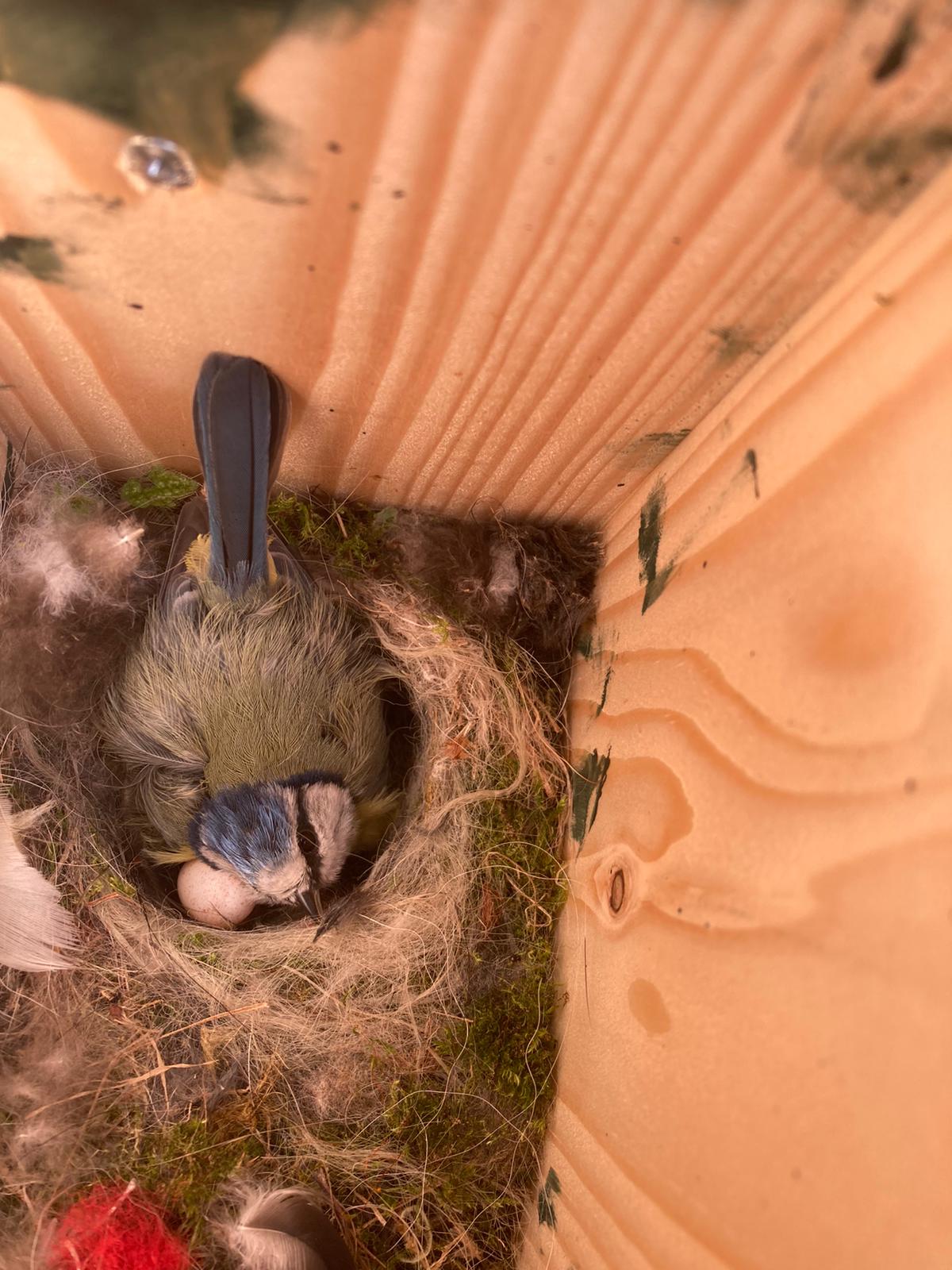
The birds are also now in full breeding mode, with lots of eggs. Stay tuned for the inevitable chick pics!
Just before the latest lock down the Netherlands Society for Behavioural Biology managed to sneak in it’s annual meeting. I was happy to represent insects with my keynote talk on Chemicals and colours: uncovering the chemical signals maintaining a colour polymorphism, and to get a lovely walk on the beach!
I dashed back to the UK over new year to attend PopGroup51 in Bristol and present my current work on shiny bugs!

I’ve finally recovered from conference flu so just a quick post about ESEB 2017.
The conference was awesome, and very well organised given the size. The main program was on an app that my old phone sadly cannot handle, but they also gave out smaller program booklets so I was able to organise my time well enough.
As usual for ESEB the standard of the talks was pretty high. My lack of access to the abstracts did mean I ended up in a fair few theoretical talks, but honestly one of the reasons I prefer large conferences is getting outside my narrow sphere of study for a while. I found the whole experience very useful for helping me generate new ideas, not to mention finding new collaborators! I also quite enjoy the challenge to trying to follow talks on subjects or techniques I am not familiar with. As someone who got into academia, at least partly, because they just enjoyed learning new things, conference season is the highlight of my year.
When to accept or reject a male during the mating season, the optimal strategy: Eva Kisdi #eseb2017 pic.twitter.com/Wup2TfY5e7
— Swanne Gordon (@swannegordon) August 23, 2017
“This is going to be a theory talk, so there’s still time for you to leave” #eseb2017 #overheardateseb
— Emily BurdfieldSteel (@MothPostDoc) August 25, 2017
The conference dinner was also very fun. Rather than the usual drill of sitting in a large room, on a table of people you don’t know, eating dry roast ham, we instead had a “food fair” in a nearby park with vans serving pizza, chips, ice cream, wraps and various other foods.
Really cool outdoorsy setting for the closing dinner. Including this super cool burger truck. #eseb2017 pic.twitter.com/eE8ttKBgSD
— Bibiana Rojas (@biobiiana) August 25, 2017
Oh and finally. I won 3rd prize for my poster!

A few weeks ago to returned from Behavior 2015 in Cairns and now I have finally gotten around to writing about how it went.
I was there both to give a talk on my post-doc work with the moths, and to present a poster on some of the ideas that have come out of my PhD. A bit cheeky I know but if you’re going to fly halfway around the world you may as well make the most of it!
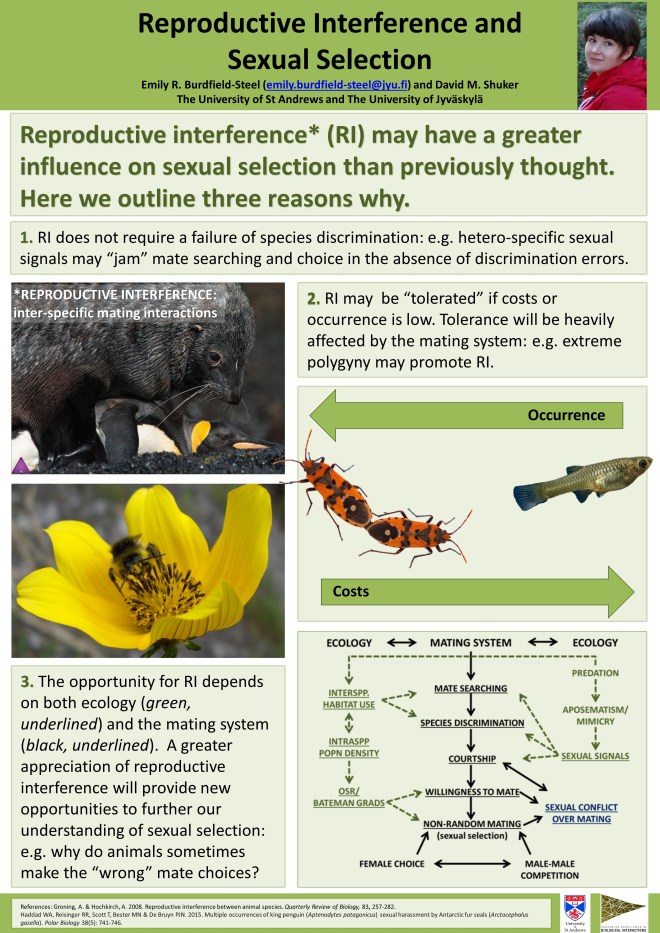
I usually struggle to attract attention to my posters so when I saw that poster presenters at Behavior also had the option of giving a one minute speed talk I signed up right away! What I didn’t realise at the time is that this talk had to be given straight after the first plenary, to the entire conference. So it was with some concern that I started preparing my speed talk. Once I had put together something sensible-sounding I practiced it on my lab. That version was considered far too boring to stand out on a Monday morning and so my final version consisted mostly of asking the audience if unanswered questions about the recent seal on penguin sex story kept them awake at night. The answer was clearly yes as I had more people come to my poster than ever before! If you are wondering what on earth my work could possibly have to do with seals sexually harassing penguins then take a look at my poster below.
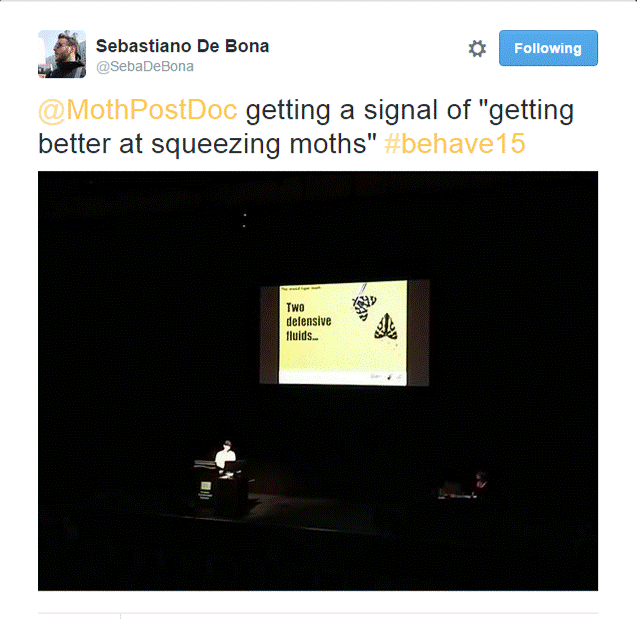
My talk also went well. I was speaking in the chemical communication session. Perhaps one of the take-home messages of this was that birds sense of smell is clearly hugely important in a variety of contexts. Not least for my work, it seems that the smell of the wood tiger moth’s chemical defenses may be just as important, if not more so, than the taste.
Other than the chemical communication session I particularly enjoyed the sessions on Costs and Conflict in Reproduction and Polyandry “beyond the individual”. One of my favorite talks was by Simon Griffith on the factors that influence the levels of extra-pair paternity in birds. He showed evidence that the presence of sub, or sister, species may drive extra-pair paternity due to selection for compatible genotypes.
I also wish I could have seen more of the session on animal contests as they were some awesome talks going on in there. As always with these big conferences it’s impossible to see every talk you wanted. The overall quality was very high though so at least I didn’t leave feeling like I had missed more good talks than I saw! I should mention here my appreciation for the active twitter hashtag, as it can easily alert you to interesting-looking talks going on in other rooms so, if nothing else, you can look up the abstract afterwards.
By far the most memorable talk was the ASSAB Public Lecture by Professor Rick Shine. His work on the can toad invasion over that past decade is fascinating. Not least because we got a brief introduction to “toads on tour”, the convoluted rout the cane toad has taken across the globe as it has been introduced to one country after another. His work also has some hopeful findings, despite the rapid spread of the cane toad many native Australian species seem to be adapting to their presence, and his labs work on chemical signalling in the tadpoles is already finding new ways to control their numbers.
Of course I should also mention that all my lab mates also gave excellent talks on everything from the moths, to snake conservation, to the ever-present risk of colorblind chickens.

I was initially going to try and cover my extra-curricular adventures in oz here was well but given the length of this I think I shall instead save that for another post…
We all have our favorite conferences. Mine is a little strange as technically it’s not even my field. Back when I was doing my masters I had planned on being a geneticist, and PopGroup (The Population Genetics Group) was the first conference I ever attended. Since then, while I certainly haven’t attended every year, I always try and find some excuse to go. My success this year was partly due to my being in the UK around that time anyway (saves on transport costs) and partly because I made a point of helping out the geneticists in my labgroup with some of their more repetitive work. This has the added benefit of making sure I don’t totally forget all the skills I learnt in my masters. Its always good to remind yourself how to build a haplotype network, even if you’re a chemical ecologist.
This year’s journey was thankfully free of bomb scares and, despite my initial doubts, the students union in Sheffield was a lovely venue (I really liked the food as well). As usual the quality of the talks was very high, although there seemed to be fewer method talks this year, or perhaps I just missed them. One benefit I find of attending PopGroup is I learn about the latest shiny new technique for sequencing, but this year the emphasis seems to be less on the techniques themselves and more on how to interpret the data they produce.
There were a lot of talks I particularly enjoyed, but since I’ve talked about them in the “Not those kind of doctors” podcast (see the end of this post for the video) I’m not going to repeat myself here. Sadly I didn’t see either of the winning student talks (Simon Martin and Martina Rauscher) this year, although I did hear good things from people who did. Rodrigo Pracana won the poster prize for her poster on “Genetic variability of captive populations of a highly eusocial stingless bee.” Alas it seems the Scottish universities have lost their edge this year.
I will mention however the final plenary talk by Simon Myers. The final slot of a conference is always a mixed blessing, and having done a bit too much Cèilidh-ing the night before, I was admittedly expecting to doze through it. However, Simon’s talk on ancient admixture in human populations really woke me up. The study focused on looking at gene flow into and within the UK and Spain. As someone who was really into early human history as a kid, learning about the genetic signals of things like the Viking and Anglo-Saxon colonisations was fascinating.
I also got to see a lot of old friends and, hopefully, make a few new ones as well. The next PopGroup is going to be in Edinburgh so that is extra motivation for me to start preparing my reasons to attend for next year!
We’re back with an episode on conferences where we discuss the unreliability of abstracts and the wonders of conference twitter.
To see Claire’s academia.edu account click here: https://nottingham.academia.edu/ClaireBurdfield
and if you fancy watching Emily in action at a conference you can see a video of one of her talks here: https://www.youtube.com/watch?v=FOlxLhF13q4

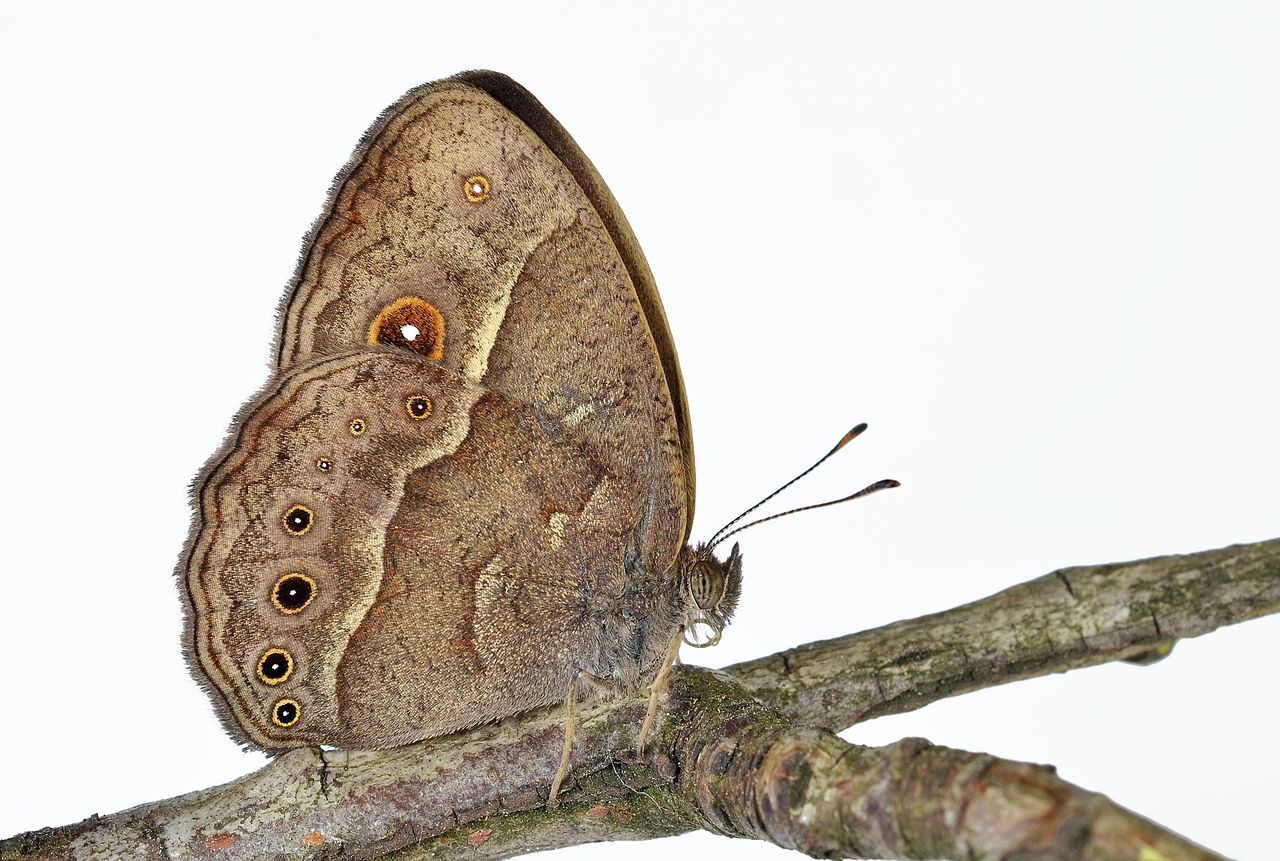
My trip to PopGroup got off to a shaky start this year when a “potentially suspicious” package shut down Edinburgh Airport hours before we were due to fly to Bristol. Thus, while everyone else was drinking wine in the roman baths, we were stuck in a hotel lobby waiting for updates via twitter. Eventually we were allowed back in the airport and made it to Bath around 1am.
Despite this, the conference was very enjoyable. The venue (the Assembly rooms) was beautiful and conveniently placed a short walk from the centre of Bath and the long lunch breaks gave us ample time to get out into the city. We even had a bit of sunshine!

The quality of the talks was very high (I feel like everyone always says this about conferences, but it is true!) My favourite was the plenary given by Dr Lilach Hadany on stress-induced variation. She talked about the ways in which stress-induced recombination, dispersal and mutation can all spread through populations. The idea being that individuals of low fitness (that are therefore stressed) have more to gain from changing their phenotype than successful individuals. Thus, “the living dead can take any risk”. I also liked Krzysztof Kozak’s talk on the non-hybrid origin of the butterfly Heliconius hermathena. The talk pretty much does what it says on the tin, despite its hybrid phenotype, genotypic evidence suggests that the species is not the result of hybridisation at all. Instead its characteristic zebra pattern may be ancestral, or have evolved multiple times.
As for prizes, the Scottish universities clearly came out on top. The prizes for best student and best post-doc talk went to Sam Lewis and Susan Johnston respectively. The prize for best post-doc poster also went to Edinburgh. In fact the student poster prize was the only one to go to a different university, as I won it! A clear indication of the value of summing up you findings clearly and succinctly, even if they are not what you were hoping for.
Finally, the conference dinner was delicious and the live band very impressive. I only wish I could say the same for the DJ! At least he did his bit for the local pubs of Bath by forcing us all out of the venue in search of better music.


 Insect Chemical and Evolutionary Ecology