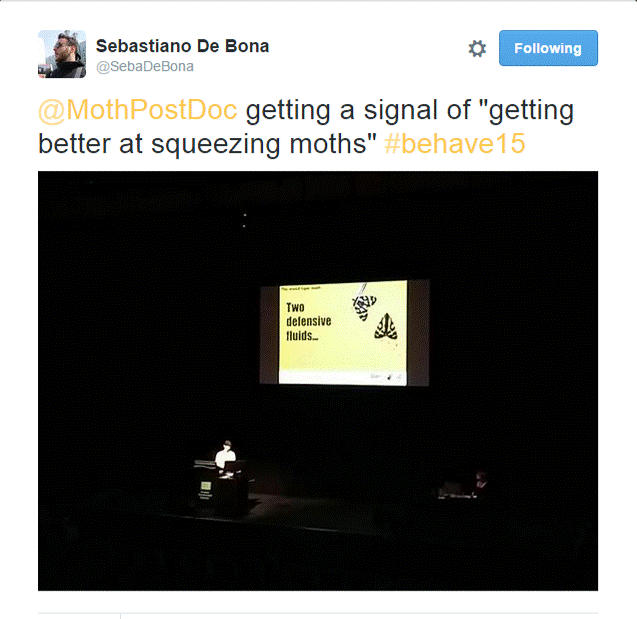
Behavior 2015

A few weeks ago to returned from Behavior 2015 in Cairns and now I have finally gotten around to writing about how it went.

I was there both to give a talk on my post-doc work with the moths, and to present a poster on some of the ideas that have come out of my PhD. A bit cheeky I know but if you’re going to fly halfway around the world you may as well make the most of it!

I usually struggle to attract attention to my posters so when I saw that poster presenters at Behavior also had the option of giving a one minute speed talk I signed up right away! What I didn’t realise at the time is that this talk had to be given straight after the first plenary, to the entire conference. So it was with some concern that I started preparing my speed talk. Once I had put together something sensible-sounding I practiced it on my lab. That version was considered far too boring to stand out on a Monday morning and so my final version consisted mostly of asking the audience if unanswered questions about the recent seal on penguin sex story kept them awake at night. The answer was clearly yes as I had more people come to my poster than ever before! If you are wondering what on earth my work could possibly have to do with seals sexually harassing penguins then take a look at my poster below.

My Poster

Picture2
Not everyone focused on that particular finding of course…

My talk also went well. I was speaking in the chemical communication session. Perhaps one of the take-home messages of this was that birds sense of smell is clearly hugely important in a variety of contexts. Not least for my work, it seems that the smell of the wood tiger moth’s chemical defenses may be just as important, if not more so, than the taste.

Other than the chemical communication session I particularly enjoyed the sessions on Costs and Conflict in Reproduction and Polyandry “beyond the individual”. One of my favorite talks was by Simon Griffith on the factors that influence the levels of extra-pair paternity in birds. He showed evidence that the presence of sub, or sister, species may drive extra-pair paternity due to selection for compatible genotypes.

I also wish I could have seen more of the session on animal contests as they were some awesome talks going on in there. As always with these big conferences it’s impossible to see every talk you wanted. The overall quality was very high though so at least I didn’t leave feeling like I had missed more good talks than I saw! I should mention here my appreciation for the active twitter hashtag, as it can easily alert you to interesting-looking talks going on in other rooms so, if nothing else, you can look up the abstract afterwards.

By far  the most memorable talk was the ASSAB Public Lecture by Professor Rick Shine. His work on the can toad invasion over that past decade is fascinating. Not least because we got a brief introduction to “toads on tour”, the convoluted rout the cane toad has taken across the globe as it has been introduced to one country after another. His work also has some hopeful findings, despite the rapid spread of the cane toad many native Australian species seem to be adapting to their presence, and his labs work on chemical signalling in the tadpoles is already finding new ways to control their numbers.

Of course I should also mention that all my lab mates also gave excellent talks on everything from the moths, to snake conservation, to the ever-present risk of colorblind chickens.

Picture5

I was initially going to try and cover my extra-curricular adventures in oz here was well but given the length of this I think I shall instead save that for another post…

Excuses, excuses….

Peer review can be frustratingly slow. For once I am not complaining about one of my own papers, but rather a paper I have been hoping to cover in a blog post for….oh the last 8 months. Unfortunately said paper is still not out and so instead I just look sadly at my mostly-written blog post about once a month as it becomes gradually less and less topical. So that’s my excuse for the current lack on content on this blog.

Who knows, maybe my frustration will even drive me to submit my own reviews before the journals start sending me “gentle” reminder emails…maybe.

Do the benefits of polyandry scale with outbreeding?

My latest paper is available though advanced access in Behavioral Ecology. Sadly my beautiful diagrams are relegated to the supplementary materials so I will instead put them here in all their colorful glory!

Diagram showing the design of experiment 1. Females (on the left) were paired twice with either one or two males from one of the four treatments. Red bugs indicate Lygaeus equestris while yellowbugs indicate Lygaeus simulans.
Diagram showing the design of experiment 1. Females (on the left) were paired twice with either one or two males from one of the four treatments. Red bugs indicate Lygaeus equestris while yellow bugs indicate Lygaeus simulans.
Diagram showing the design of experiments 2 and 3. Females (on the left) were paired with two males according to the four treatments. Red bugs indicate Lygaeus equestris while yellow bugs indicate Lygaeus simulans. The brush indicated that males were washed with hexane prior to being introduced to the female.

Cutting off bug penises in the name of science

Our latest paper is out and already getting some media attention!

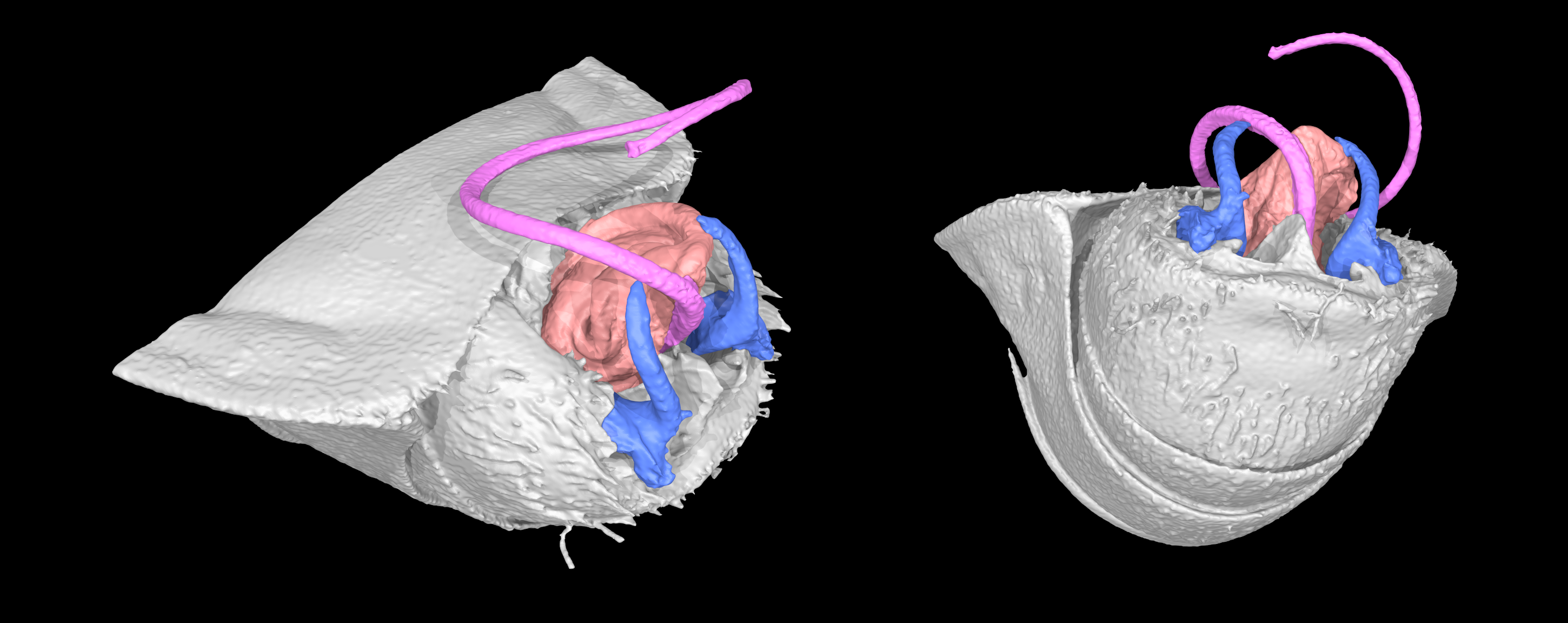
Admittedly I had no part in the penis cutting aspect of this paper, that was all Liam’s work. I did help with the awesome microCT scans of mating bugs however. So once you’ve finished laughing at the guardian article, go check out the paper itself for an idea of what those crazy penises are actually doing during mating!

Micro-CT scan showing external genitalia of Lygaeus simulans following mating. The long penis can be seen in pink, and the paired claspers in blue.

Working with tiny dinosaurs

I decided fairly early on in my career that invertebrates were the way to go. Sure, herps are pretty cool, and I flirted with the idea of studying bats, but at the end of the day insects and spiders have it all. More importantly, who wants to spend their whole life filling out ethics forms? Thus, it was with great trepidation that I began my current work using blue tits. I’m still studying insects, but in this case I also want to look at their common predators, and that means birds.

Bother.

Don’t get me wrong, I like birds just fine. I even have a bunch of pictures of me in my teens flying raptors (or more accurately holding raptors as they try to swing upside down from my glove…but I digress). I don’t have much experience with small birds though. We had a budgie growing up but that was mostly by accident. So here is an ongoing list of thing I have learnt in my foray into vertebrate behaviour:

DSCF3058
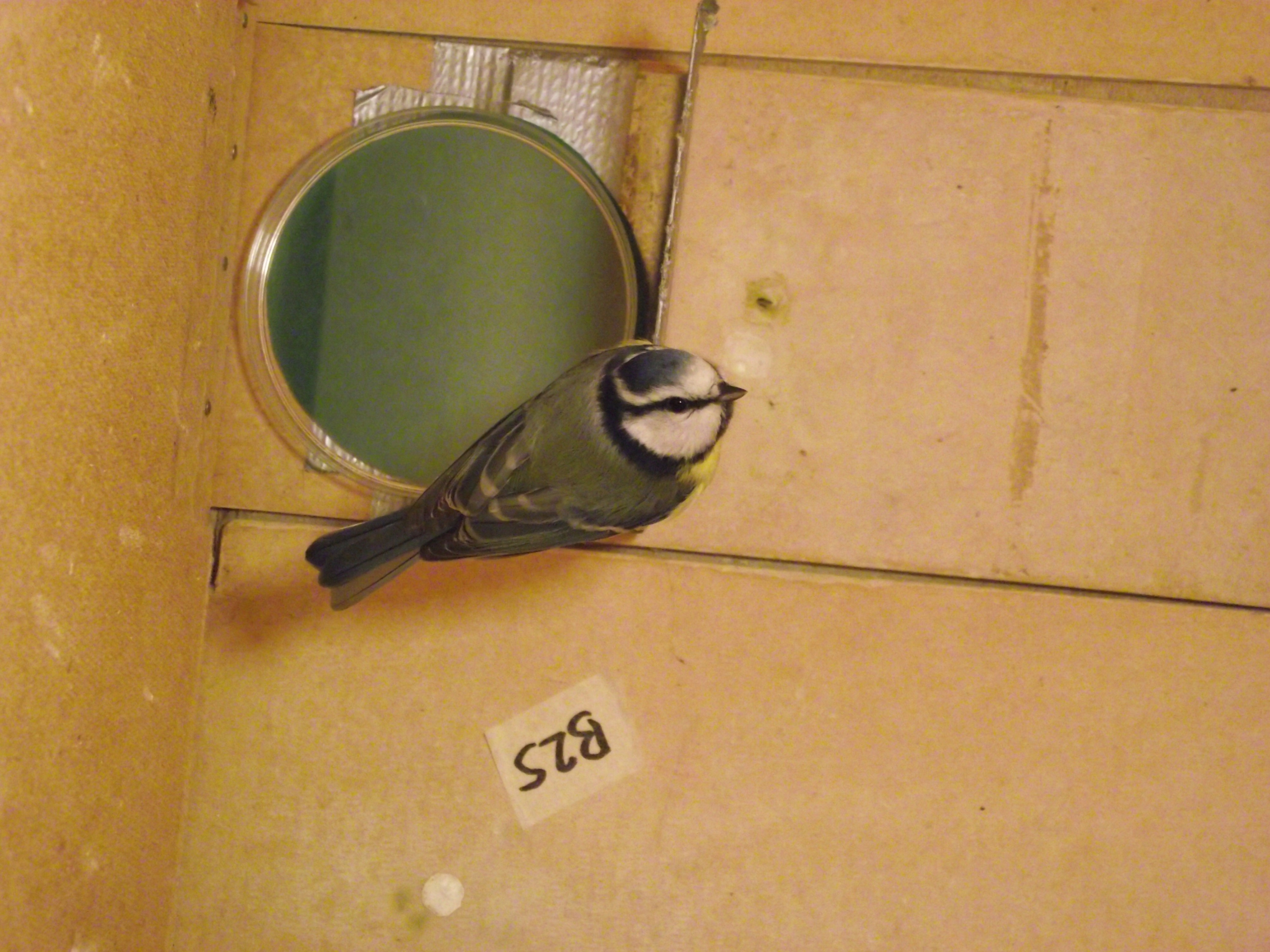
I may look cute, but I know only hate

1. Blue tits are tiny balls of rage and they will fight you.

2. No seriously, they clearly have not caught up with the evolutionary changes that have occurred since they were dinosaurs. Also they have needle sharp beaks and an uncanny ability to find the softest, most tender, part of your hand to bite.

3. They can learn fast if there are mealworms involved. Not only do they quickly figure out that food appears in the food bowl, but several of them also learnt how the tray the food bowl sits on works. This is bad because it means they can stick their tiny heads through the gap where the tray slides into the cage and steal the mealworm or moth before you even start your experiment! On one occasion I started a trial only to realise the bird had already stolen the mealworm while I was distracted setting up my camera. Other times I have to guard the tray like a hawk and shoo away little bird faces as they poke through the gaps. Interestingly, the fact that they can get so far through the gaps suggests they could probably also get out of the cages if they wanted, but it seems freedom is not as strong a motivator as mealworms.

4. The protocol for catching escaped birds goes something like this:

  • Turn off the lights
  • Wait for bird to land on the floor (they shouldn’t fly when it’s dark)
  • Track bird down using light from a torch or your phone
  • Grab bird
  • Success!

In my experience however one (or several) of the following things actually happen:

  • Bird flies around the room in the dark banging into walls and shrieking like a demon.
  • Bird hangs upside down from light fittings like some kind of bat
  • Bird flies directly at your touch/phone
  • Bird runs around on the floor you are too scared to chase it in case you step on it in the dark
  • Bird lands on you, and then looks at you stupidly as you both wonder how your lives have come to this

If you can’t guess from this list of complaints I’m having a ridiculous amount of fun. I still can’t quite believe they pay me to do this, but long may it continue.

DSCF3006
But WHY are the mealworms gone?

Note: No birds were harmed in the making of this blog post. Many mealworms were though.

PopGroup48

We all have our favorite conferences. Mine is a little strange as technically it’s not even my field. Back when I was doing my masters I had planned on being a geneticist, and PopGroup (The Population Genetics Group) was the first conference I ever attended. Since then, while I certainly haven’t attended every year, I always try and find some excuse to go. My success this year was partly due to my being in the UK around that time anyway (saves on transport costs) and partly because I made a point of helping out the geneticists in my labgroup with some of their more repetitive work. This has the added benefit of making sure I don’t totally forget all the skills I learnt in my masters. Its always good to remind yourself how to build a haplotype network, even if you’re a chemical ecologist.

This year’s journey was thankfully free of bomb scares and, despite my initial doubts, the students union in Sheffield was a lovely venue (I really liked the food as well). As usual the quality of the talks was very high, although there seemed to be fewer method talks this year, or perhaps I just missed them. One benefit I find of attending PopGroup is I learn about the latest shiny new technique for sequencing, but this year the emphasis seems to be less on the techniques themselves and more on how to interpret the data they produce.

There were a lot of talks I particularly enjoyed, but since I’ve talked about them in the “Not those kind of doctors” podcast (see the end of this post for the video) I’m not going to repeat myself here.  Sadly I didn’t see either of the winning student talks (Simon Martin and Martina Rauscher) this year, although I did hear good things from people who did. Rodrigo Pracana won the poster prize for her poster on “Genetic variability of captive populations of a highly eusocial stingless bee.” Alas it seems the Scottish universities have lost their edge this year.

I will mention however the final plenary talk by Simon Myers. The final slot of a conference is always a mixed blessing, and having done a bit too much Cèilidh-ing the night before, I was admittedly expecting to doze through it. However, Simon’s talk on ancient admixture in human populations really woke me up. The study focused on looking at gene flow into and within the UK and Spain. As someone who was really into early human history as a kid, learning about the genetic signals of things like the Viking and Anglo-Saxon colonisations was fascinating.

I also got to see a lot of old friends and, hopefully, make a few new ones as well. The next PopGroup is going to be in Edinburgh so that is extra motivation for me to start preparing my reasons to attend for next year!

Researcher of the month

I was recently featured as researcher of the month by the Center of Excellence in Biological Interactions where I work. Here’s my profile for them.

With a background in behavioural ecology and genetics, Emily is interested in investigating how inter and intra-species interactions shape evolution. As a keen entomologist she used insects in order to address a wide variety of questions. Her previous work focused on sexual selection and the evolution of mating systems. More recently she has become interested in variation in predator defense in aposematic species. In particular, the prevalence of “cheats” in aposematic populations in the form of automimicry: where poorly protected individuals benefit from their similarity to better-protected conspecifics. Emily joined the CoE in April 2014 and is based in Jyväskylä where she is working on variation in chemical protection in the wood tiger moth (Parasemia plantaginis). She is currently working in collaboration with the Schulz lab at TU Branschweig to identify the compounds used by the wood tiger moth for protection, as well as looking for variation in protection between individuals, and potential costs associated with this variation.

Photo: EMILY BURDFIELD-STEEL is our featured researcher of the month! With a background in behavioural ecology and genetics, Emily is interested in investigating how inter and intra-species interactions shape evolution. As a keen entomologist she used insects in order to address a wide variety of questions. Her previous work focused on sexual selection and the evolution of mating systems. More recently she has become interested in variation in predator defense in aposematic species. In particular, the prevalence of “cheats” in aposematic populations in the form of automimicry: where poorly protected individuals benefit from their similarity to better-protected conspecifics. Emily joined the CoE in April 2014 and is based in Jyväskylä where she is working on variation in chemical protection in the wood tiger moth (Parasemia plantaginis). She is currently working in collaboration with the Schulz lab at TU Branschweig to identify the compounds used by the wood tiger moth for protection, as well as looking for variation in protection between individuals, and potential costs associated with this variation. For more information on her research see https://bugbehaviouralecology.wordpress.com/.

ICBB2014 (or “Impostor syndrome raises it’s ugly head again”)

At the beginning of August I attended the international butterfly behavior conference (ICBB2014) in Turku. This was my first time at this conference as I admit I wasn’t even aware it existed until this year! In my defense, I’ve never worked on butterflies (and in fact still don’t!) but thankfully it seems standards are slipping and they now happily tolerate moth researchers in their midst. Despite the slight mismatch, it was a really good opportunity for me to catch up on what’s going on in the field, and get a better handle on the biology of my new system; butterflies being a lot closer to moths than bugs are!


Cute butterflies at Lammi
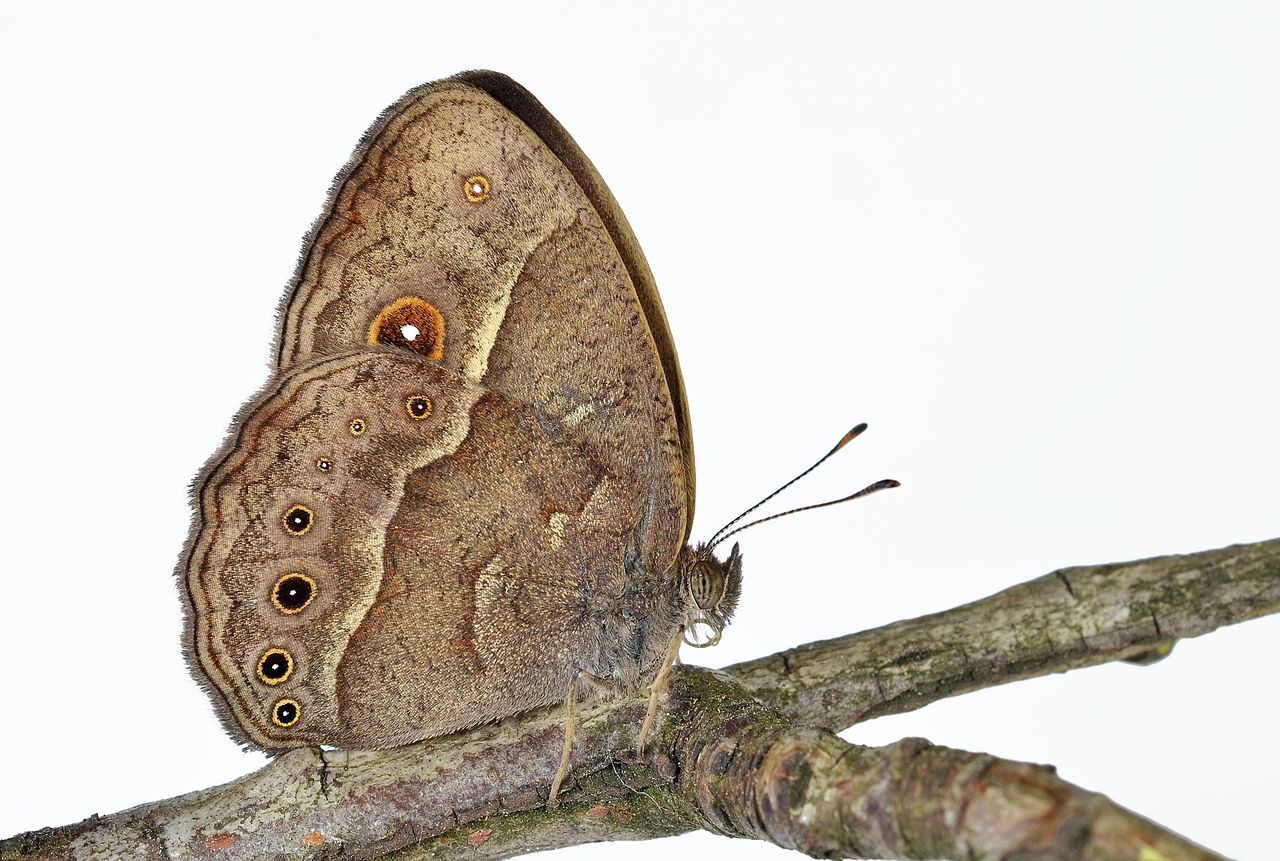
I am now also better acquainted with the rockstars of the butterfly world. I was already aware of the extensive ongoing work on Heliconius thanks to various entomology and genetics conferences, but I never realised the sheer amount of cool work on Bicyclus anynana (other wise known as the squinting bush brown). The Glandvill fritillary, famous for it’s use in the study of meta populations, was also well represented. This at least was one system I was already familiar with, having visited the home of the Glanville Fritillary Project at Lammi back in April (we were there to check out their impressive butterfly-rearing facilities). From the perspective of my current work on the maintenance of polymorphism in aposematic systems there were a lot of very relevant talks, but Erica Westerman’s talk, in particular, on biased mate-preference learning got me thinking more on the role of learning in reproductive interference as well.
  
Female Bicyclus anynana. Photo taken by Gilles San Martin. From Wikimedia Commons.

So overall it was a very useful and enjoyable experience for me. That said there were moments when I felt very much like an outsider. I’m sure this is hardly an uncommon experience when attending a meeting for the first time, or moving into a slightly different system. For me this feeling tends to surface more at small meetings and in this case was probably made stronger by the references to the meeting’s long history and tight-knit community. To be clear, this is not a criticism. I’m certain the only intent behind these was to highlight both the success of the meeting, and the benefits it has, and will continue to bring, to the field. I wonder if I’m alone however in feeling subtlety excluded and, more importantly, how I can stop feeling that way. I think not having anything to present (either as a talk or a poster) certainly contributed. With a bit of luck I will soon have enough data to ensure I don’t find myself in that position again for quite some time. Still it seems my impostor syndrome hasn’t retreated quite as much as I thought. Bother.


I don’t want to end this post on a down note though, so I will take this opportunity to mention the awesome Marimekko bags we got with our registration packs! As well as making fellow conference-goers easily recognisable, even from considerable distances, they have made those of us who went the envy of our whole lab group. 🙂 I’m still sad that the different colours were not, in fact, an experiment on density dependent selection (several people expressed a desire for the rarest colours). Maybe next time?

Fieldwork is Fun

Two major things happened for me in June. Number 1: I passed my PhD viva! I can now actually go around calling myself a Dr.

Number 2: I did some fieldwork in Scotland. Despite demonstrating on various field courses its actually been a few years since I did proper fieldwork. For this trip we had quite an ambitious plan. Thankfully, despite less than ideal weather, we were pretty successful. Not only was I able to see (and catch) my moths in the wild for the first time, but we got a number of predation experiments set up which our field assistant has the honour of finishing off for us over the next month.

I had ambitious plans to work on a couple of papers and get started on my thesis corrections while I was there, but the long days in the field quickly put an end to that idea. I’d like to say I was sad about that, but one of my favourite things about fieldwork has always been the refreshing single-mindedness of it. Normally I always have at least five things I should be doing at any one time, plus a bunch of side projects that never quite happen, but on field work there is none of that. All the complexities of life drift away and for a little while you have one clear purpose and no distractions. That’s not to say fieldwork doesn’t bring complications of it’s own (it certainly does), but somehow these always feel so much more manageable than my usual day-to-day worries.

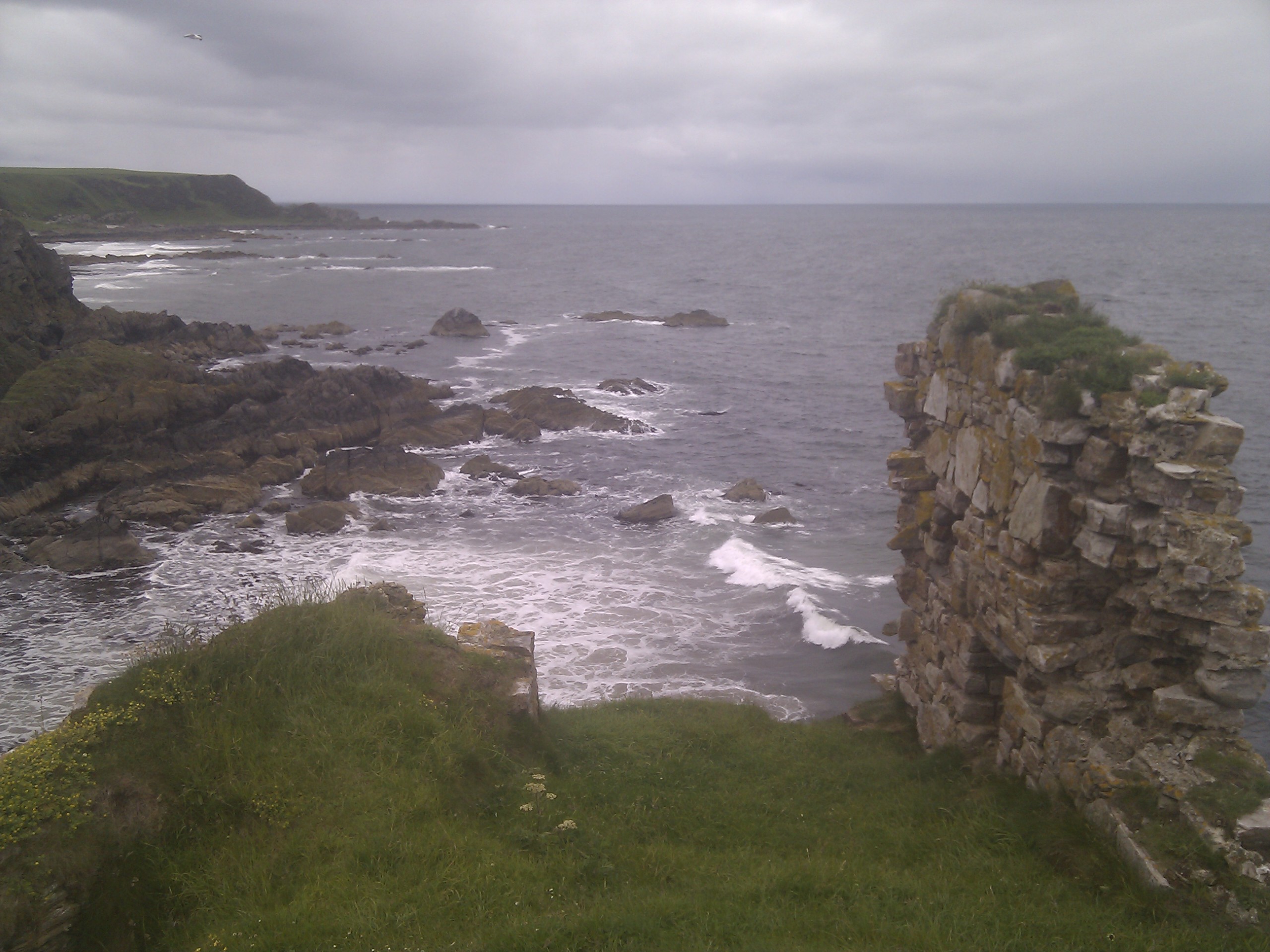
Of course the trip wouldn’t have been nearly as fun were it not for my awesome labmates. Despite our rather packed schedule we found the time to visit a couple of whisky distilleries (developing expensive tastes while we were at it), explore a ruined castle on the cliffs and see dolphins, twice! I also got to watch their first experience of BBC radio, in particular radio 2. I’m pretty sure they are now convinced that all British people are insane, or at least that our radio presenters are on drugs. Oh well, at least it distracted them from my driving…

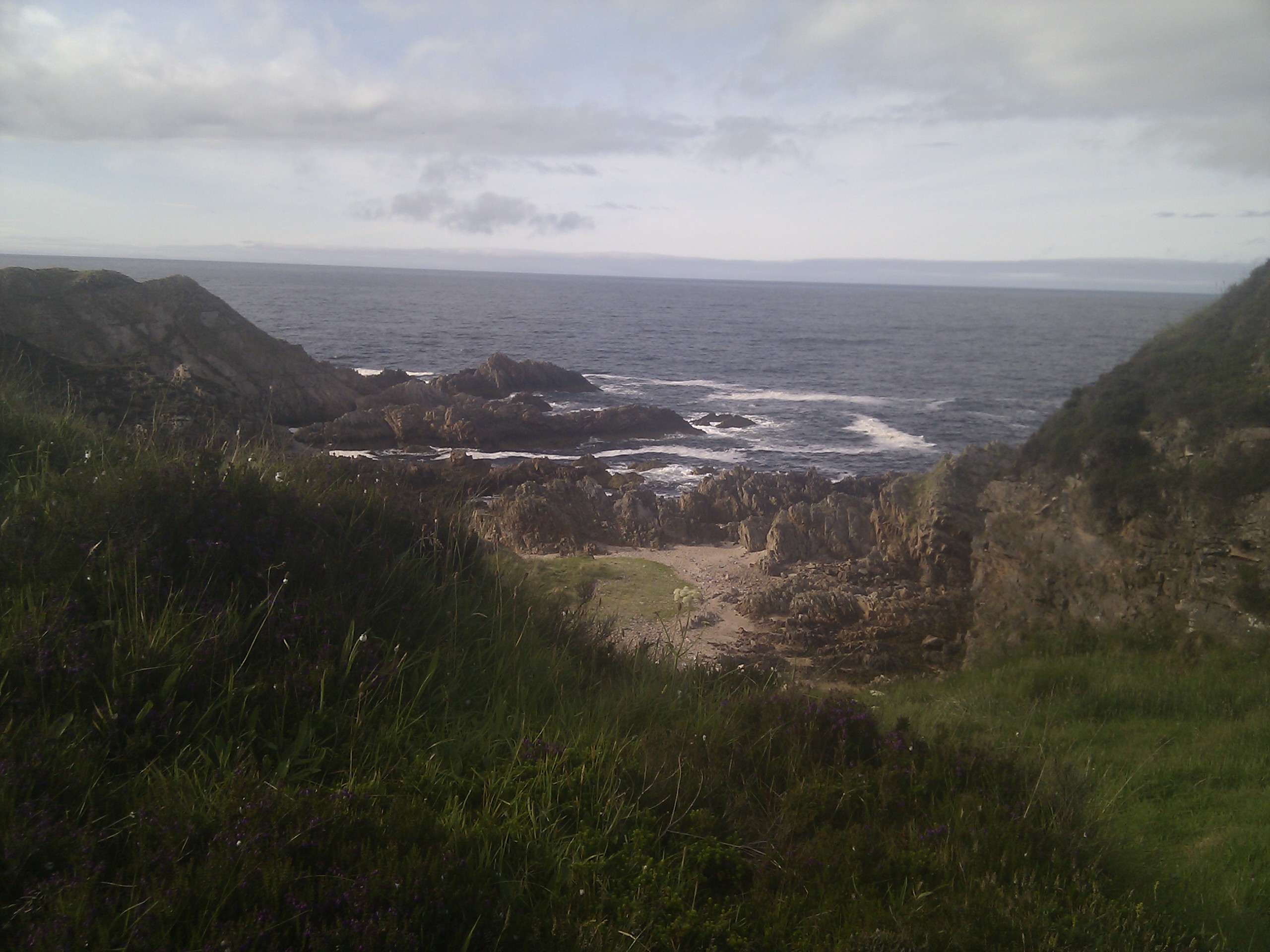
The view from Findlater Castle
Moth habitat by the sea